Bartender's Factory
Published on May 5, 2026
A complete roadmap to launching a respected, high-earning career in Nepal's thriving hospitality scene — from your first certification to your first five-star bar shift.
The Evolution of Nepali Hospitality
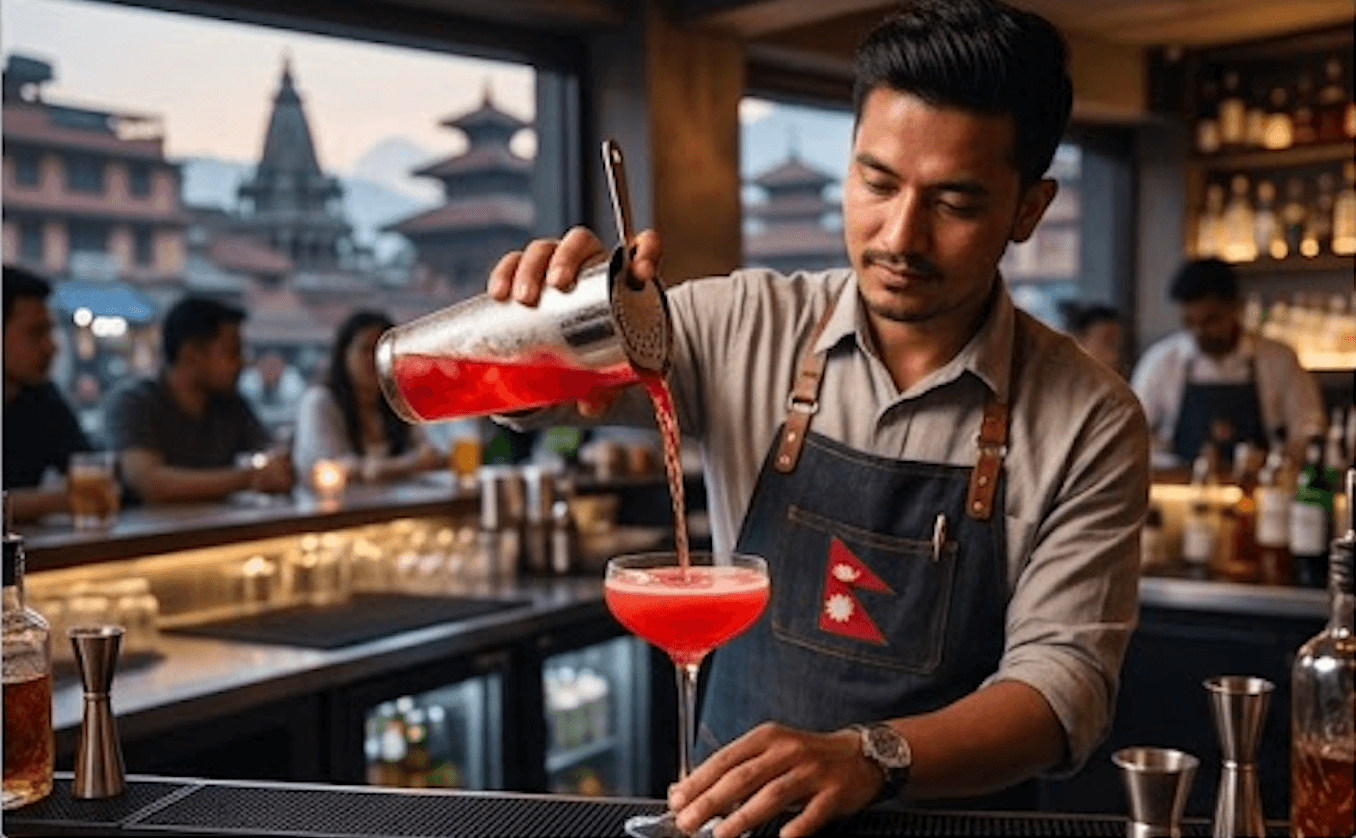
Not long ago, bartending in Nepal was seen as a stepping stone — something you did while waiting for a "real" job. That perception has completely changed. By 2026, bartending has emerged as one of the most dynamic and financially rewarding careers in Nepal's hospitality sector. Kathmandu's Thamel district has given way to polished cocktail dens in Jhamsikhel and Lazimpat, while Pokhara's lakeside strip now hosts rooftop bars that rival anything you'd find in Bangkok or Bali.
The rise of international hotel chains — Marriott, Hyatt, and several luxury boutique brands — has brought with it a demand for skilled, certified bartenders who can hold their own on a world stage. The title "Liquid Chef" is no longer a novelty; it is a job description. If you have a passion for flavors, people, and craft, this guide will show you exactly how to build a career worth raising a glass to.
Step 1: Formal Education and Certification
Every professional journey starts somewhere, and in bartending, the smartest starting point is a recognized certification. While it is possible to begin as a barback — someone who stocks, cleans, and assists senior bartenders — fast-tracking through a formal program will save you years of trial and error.
Institutions like Silver Mountain School of Hotel Management in Kathmandu offer hospitality programs that include dedicated bar modules. Several private academies have also emerged, offering focused 3-month bartending courses that cover everything from the history of spirits and wine production to advanced cocktail techniques and bar management. These intensive programs are designed to make you job-ready, not just knowledgeable.
What should your certification cover? At minimum, look for courses that include: spirits identification and tasting, classic cocktail recipes, responsible alcohol service (a legal requirement in many establishments), and basic bar inventory management. In 2026, walking into a five-star hotel interview with a recognized certificate is your single greatest competitive advantage over candidates who learned purely on the job.
Step 2: Mastering the Core Mechanics
Knowledge alone will not make you a great bartender. The craft is deeply physical — it lives in your hands, your posture, and your muscle memory. Professional bartenders talk about "Bar Ergonomics": the science of moving efficiently behind the bar to maximize speed without sacrificing quality or causing injury over a long career.
There are four foundational techniques every bartender must master before they can call themselves a professional:
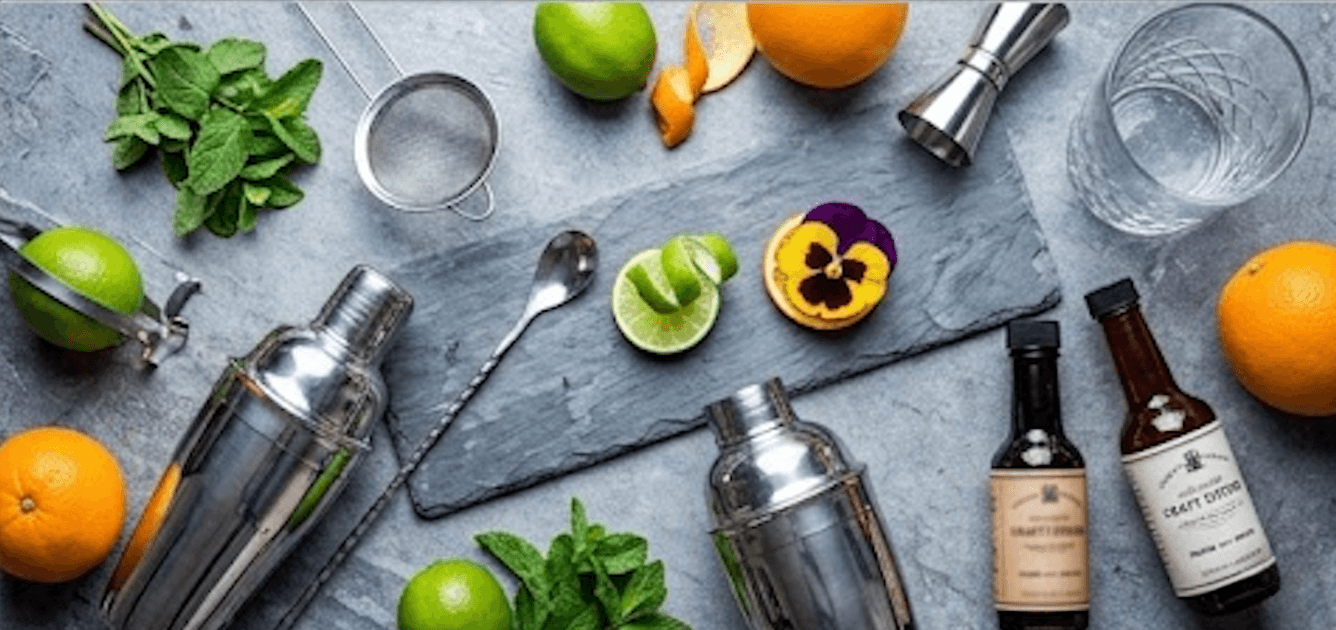
Shaking — Used for cocktails containing citrus, cream, or egg white. A proper shake is firm, rhythmic, and lasts a full 12–15 seconds to achieve the right dilution and temperature. A weak shake produces a flat, under-chilled drink.
Stirring — Reserved for spirit-forward cocktails like the Negroni or Manhattan. Stirring chills without introducing air bubbles, preserving the silky texture these drinks demand. Guests in Nepal's better bars increasingly know the difference — do not rush a stirred drink.
Muddling — The art of extracting oils and flavors from fruits and herbs without turning them into pulp. Over-muddling mint, for instance, releases bitter chlorophyll and ruins a Mojito. Light, deliberate pressure is the key.
Layering — Building drinks in the glass so that liquids of different densities create visual layers. This technique is as much about theater as it is about flavor, and it is one of the most visually impressive skills you can demonstrate at an interview.
Practice these until they require no thought. The busiest bar shifts are not the time to be thinking about technique — that mental bandwidth is needed for guests, orders, and speed.
Step 3: Developing a 'Himalayan' Palate
Technical proficiency will get you hired. A distinctive palate will make you irreplaceable. What separates Nepal's best bartenders from merely competent ones is the ability to bridge world-class cocktail standards with the extraordinary botanical wealth found in the Himalayas.
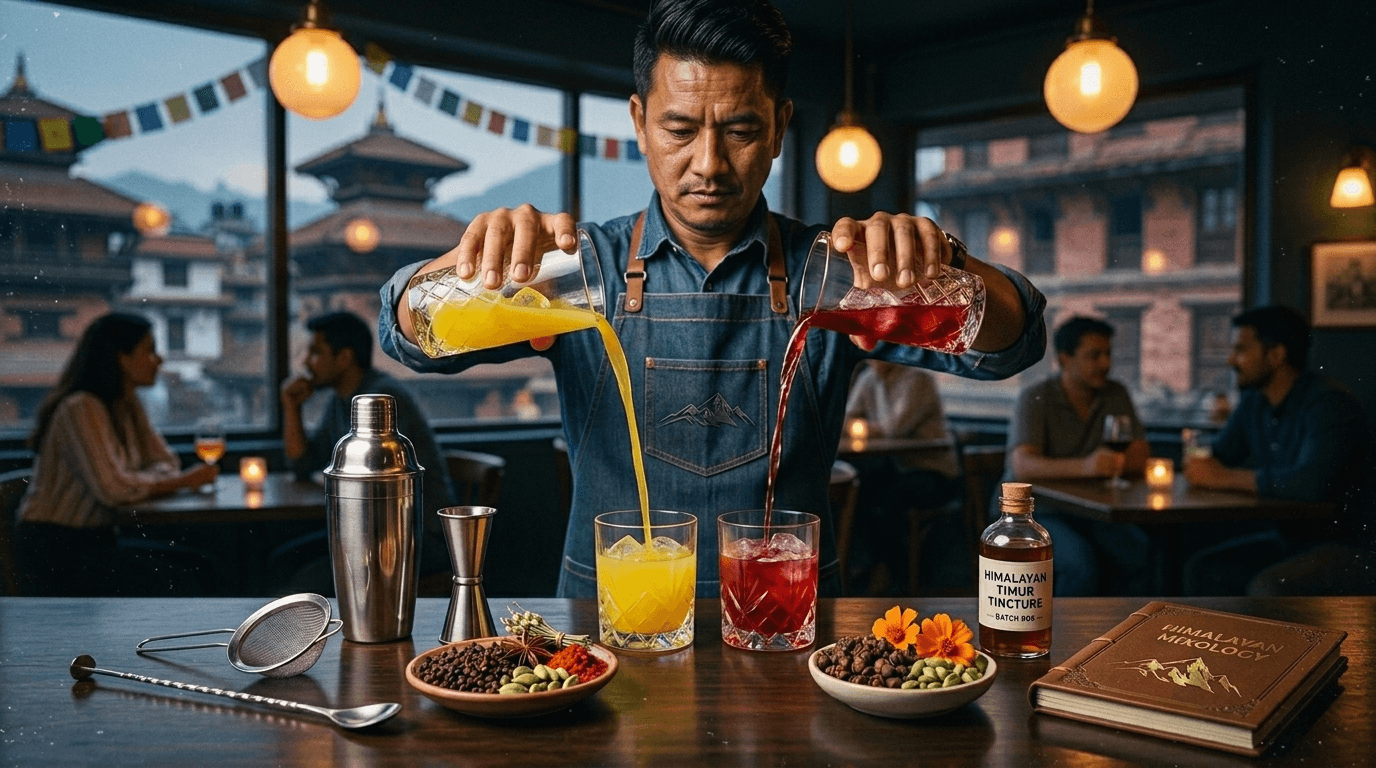
Nepal is home to ingredients that most of the world's bartenders have never even heard of. Timur (Nepalese Sichuan pepper) delivers a citrusy, mouth-numbing heat that pairs beautifully with gin. Jimbu, a dried Himalayan herb with an onion-like fragrance, can add an unexpected savory depth to certain spirit infusions. Lapsi (hog plum) offers a tart, tropical sourness that makes a compelling substitute for conventional citrus. Chhaang, a traditional fermented grain drink, can be incorporated as a base or a rinse to give cocktails genuine cultural authenticity.
Building a "Himalayan Palate" means training yourself to taste these ingredients critically — understanding not just what they taste like alone, but how they behave when combined with alcohol and other cocktail components. A "Timur Gin Fizz" or a "Lapsi Sour" is not just a gimmick; it is a signature that tells a story, connects guests to the land, and creates a drink that simply cannot be replicated anywhere else in the world. That is the most powerful marketing tool a bartender can possess.
Step 4: The Art of Guest Interaction
Every seasoned bartender will tell you the same thing: technical skill gets you the job, but people skills build the career. The bar is a uniquely intimate hospitality space. Unlike a restaurant server who visits a table a few times per meal, a bartender is on stage, in full view, for the entire duration of a guest's experience. That visibility is both an opportunity and a responsibility.
Learning to "read the room" is a skill that develops over time but can be accelerated with conscious practice. A solo guest hunched over their phone almost certainly wants the quiet companionship of a good drink, not a conversation. A group celebrating a birthday wants energy, engagement, and maybe a dramatic presentation. A couple on what appears to be a first date needs attentive service delivered with discretion.
Language is a multiplier. In a country where tourism drives significant hospitality revenue, a bartender who is fluent in English — and conversational in one additional language such as Mandarin, German, or Japanese — is immediately more valuable than one who is not. Even small efforts, like learning how to welcome guests or describe cocktails in their native language, create memorable moments that lead to better tips, better reviews, and stronger word-of-mouth recommendations.
Beyond language, develop genuine curiosity about the people who sit at your bar. Ask thoughtful questions. Remember returning guests' preferences. These habits transform a transactional interaction into a relationship, and relationships are the foundation of a long, successful career in hospitality.
Step 5: Building Your Career Path
Once you have your certification and your first position, the real work begins. A clear career trajectory in bartending looks something like this: Barback → Junior Bartender → Bartender → Senior Bartender → Bar Supervisor → Bar Manager → F&B Manager or Bar Consultant.
At each stage, diversify your skill set. Enter cocktail competitions — Nepal's hospitality scene now hosts several annual competitions that offer both prize money and industry visibility. Build a presence on social media where your cocktail creations can reach a global audience. Consider pursuing internationally recognized certifications like the WSET (Wine & Spirit Education Trust) to distinguish yourself further.
The bartenders who reach the top of this profession are not simply those who make the best drinks. They are the ones who treat bartending as a craft worth studying, refining, and sharing — with the same seriousness that a chef brings to a kitchen or a musician brings to their instrument. Nepal's hospitality industry is ready for that level of dedication. The question is whether you are.